House Party
Swish wanted a simple promise for weekends: your house, our party.
I shipped the feature end-to-end — the in-app entry point, category experience, preset packs, promo wiring, and analytics. Idea to production in one sprint.
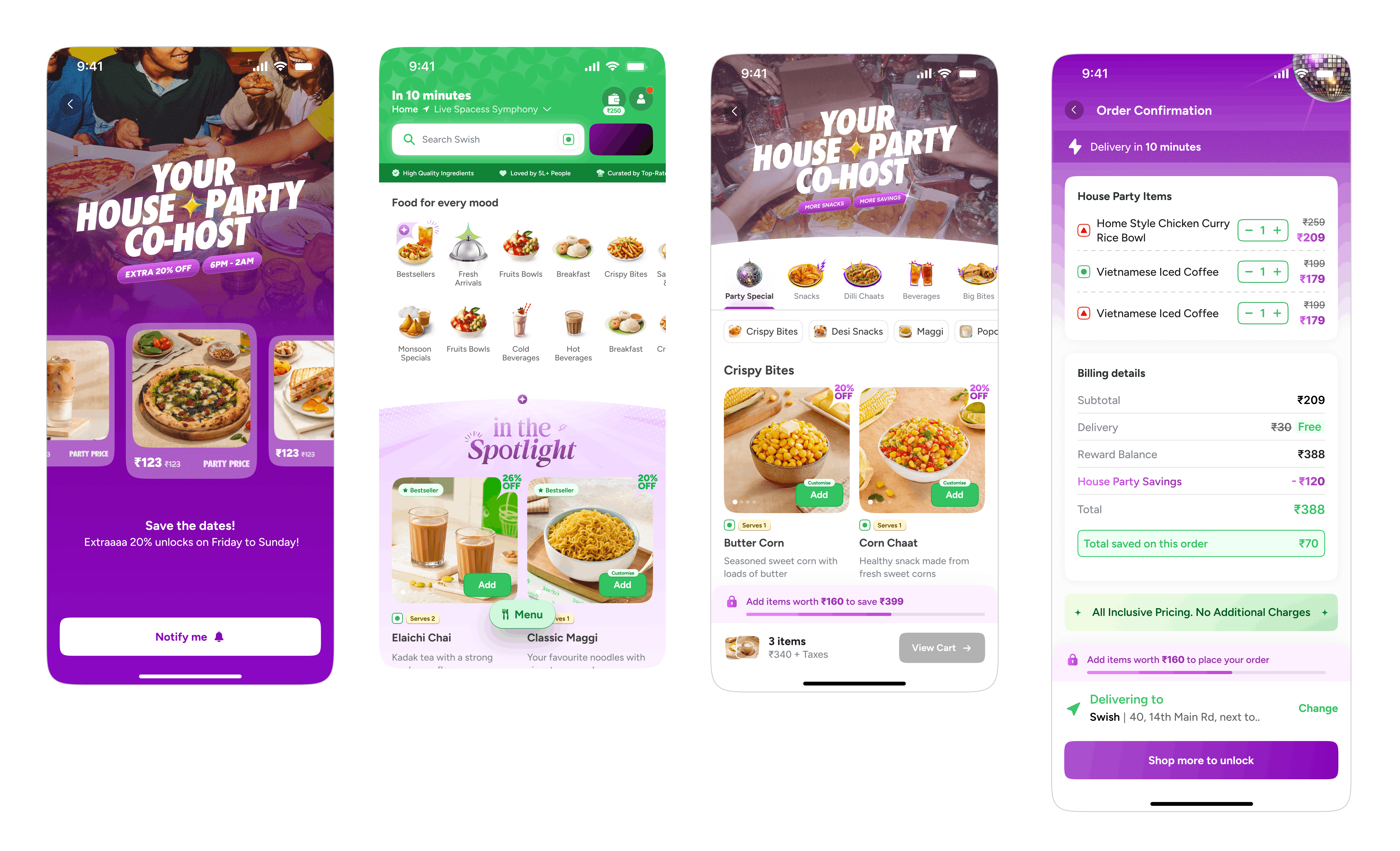 Entry → category experience → cart summary
The insight
People were already using Swish for group orders. Weekend nights meant scrolling too much, not knowing quantities, forgetting drinks, ending up with a cart that didn't feel party-ready.
We just made it obvious and easier.
What shipped
House Party tile + category page — a dedicated entry point for weekend use, designed for quick scanning: vertical menu, bestsellers up top, clean snacks / drinks / desserts grouping.
Preset packs (4–8 people) — no combo-builder. Curated packs so users don't overthink.
Launch promo — extra 20% off on big orders, weekends only. The UI had to clearly show savings so users trusted checkout.
Analytics — tracked tile impressions → clicks → orders → AOV. Clean enough that growth and product could review after the first weekend.
What was tricky
Preset packs beat a fancy configurator every time. Speed and clarity win. The hard part was correctness — big orders mean more line items, more price recomputes, and more chances to break something quietly.
Phase 1 was restricted to SKUs already stable at scale, so the UI had to match what ops could actually deliver reliably.
Campaign
This wasn't ship-and-pray. The go-to-market was built around the same insight — people were already doing this, we just made it a thing.
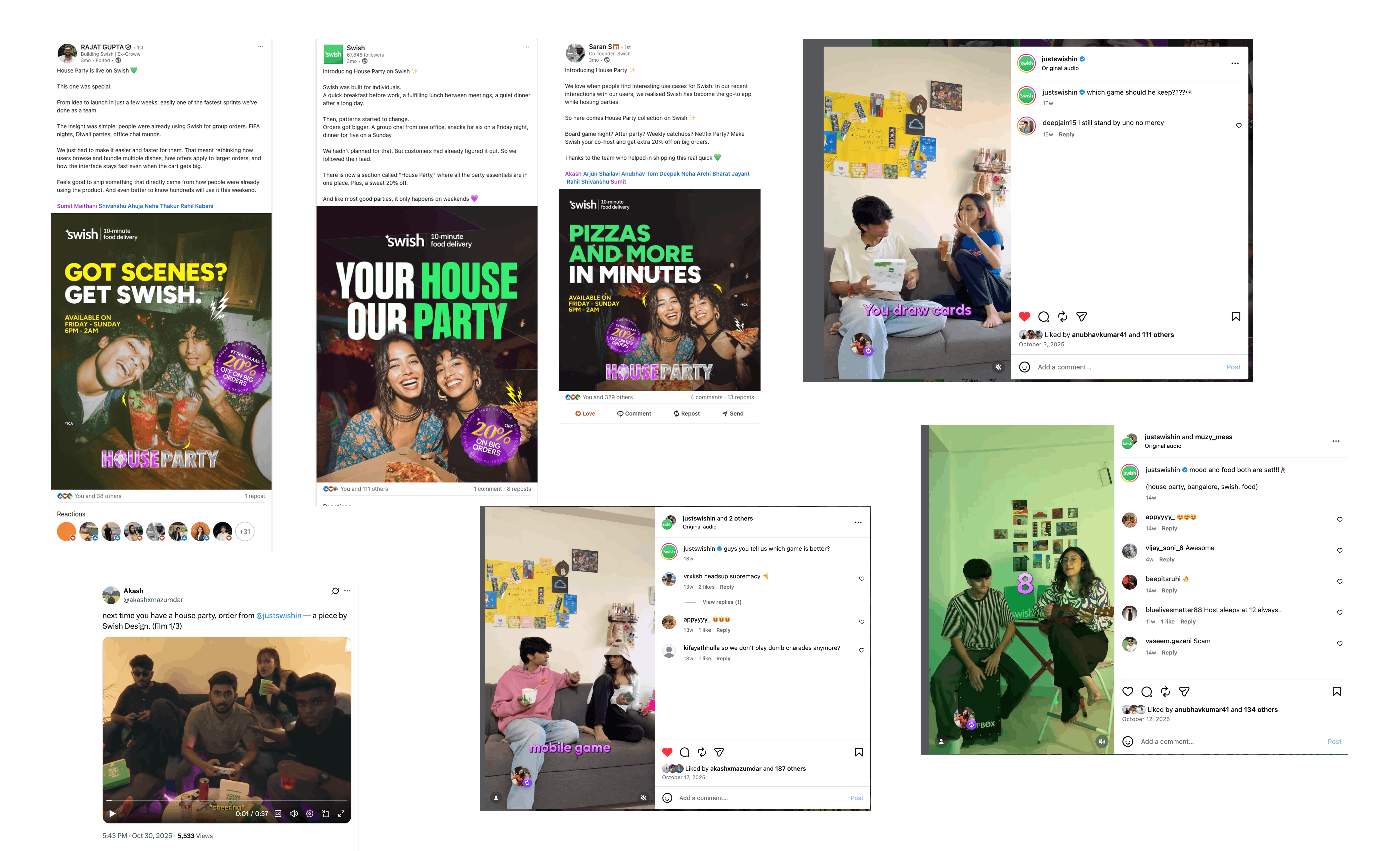 Launch posts across LinkedIn and Instagram
Posts: 1 · 2 · 3 · 4 · 5 · 6 · 7
What I learned
Shipping packs first beats building a fancy configurator. For group orders, trust matters — showing savings and stable cart math is as important as the creative. Campaign only becomes a product lever when analytics are clean.